Euronet

Connect to Faster Payments While Minimizing Risk

More than ever, your customers demand fast, convenient, and digital payments. Far beyond pizza delivery, consumers ordered everything from exercise equipment to cat litter to theatre tickets online – delivered straight to your door or email inbox. Classes from kindergarten through University are streamed live. Food delivery services, groceries ordered online and picked up in the parking lot—streaming movies – any movie – viewed on any number of platforms. Consumers not only expect but now presume convenience.

The slightest stumble in this instant gratification marketplace can disrupt the ideal customer experience – wait, you’re saying I have to get out of bed to find a physical credit card to complete this transaction?

Fintechs have held the edge over banks and traditional brick and mortar retailers in meeting consumer demand for convenient and fast payments. But taking an omnichannel approach to payments will allow merchants and banks to compete.

With the help of national fast payment networks, banks can compete today. However, connecting to a real-time payments network is often fraught with complexity. Does your bank have the knowledge, the skills, and the budget to connect your system to the network, all while minimizing modernization and security risks?

The most challenging aspects of connecting to an RTP are integrating with legacy systems while managing costs. On the surface, the seemingly best investment is to keep the process in-house – you already have people and technology resources, so why not leverage them to build the connectivity you need? But the obstacles with migrating to these new platforms include cross-border capabilities, retaining current card networks and payment rails, meeting regulatory compliance, integrating fraud detection, all while considering the possibility of cloud-based solutions. Are you ready to meet those tasks?

Working with a partner with Euronet’s experience and know-how and our REN Connect solution makes it easy for your bank to join an RTP network and gain all the advantages in participating in these faster payment networks.

REN Connect is dedicated to connecting participant financial institutions to your country’s real-time payments network. Available as on-premises software or in the cloud, REN Connect enables your users, like business analysts to software developers, to connect your back-office systems to a real-time network through a visual drag-and-drop interface or industry-standard XSLT code.

REN Connect specializes in transforming message types (ISO8583 to ISO20022, for example) and can be extended easily in the future to accommodate any new message types. The solution also provides access to Euronet’s REN Foundation – digital overlay services you can leverage to build products for customers that utilize your new connection to the real-time payments network.




Our ATMs Deliver Something More Valuable than Cash

In a recent press release, Euronet Worldwide, a global financial technology solutions and payments provider, announced that the placement of AMBER Alerts on its ATM screens in several European countries had resulted in hundreds of phone calls and the successful location of eight missing persons during 2020. AMBER Alerts are emergency messages issued when a law enforcement agency determines that a child has been abducted and is in imminent danger. AMBER Alerts inform communities to assist in the search for and safe recovery of an abducted child.

Euronet initiated this community service on their ATMs in the Netherlands in 2019, and quickly expanded to four other European countries. Given the success, Euronet expects to broaden the service to its ATMs in other European countries in the coming months.

One reason we can provide this important service is the ATM Channel Manager software that Euronet has developed and deployed on its ATMs”, said Tony Warren, Managing Director – Euronet USA. “Because the ACM Client eliminates the dependency on states and screens, it allows dynamic content to be remotely deployed to ATMs easily. With ACM, content updates such as these alerts and even targeted advertising can be handled by marketing staff without IT involvement. To increase the value and effectiveness of content ACM enables it to be customized by ATM location, ATM User or even time of day, making it possible to deliver timely and relevant information to both ATM users as well as passersby.”

Euronet’s ATM screens, viewed by millions of users and passersby each day serve not only the community’s financial needs, but also provide important public service announcements such as these AMBER Alerts and notifications for area events. And since ACM supports both video and still imagery, the information can be shared in a variety of formats.

ATM Channel Manager Client Solution (ACM Client) is a multi-vendor, multi-function ATM driving software for financial institutions and ISOs looking to modernize customer experience and fleet operations with a rich transaction set and state-of-the art tools for comprehensive real-time fleet management.


None of us are as smart as all of us

Renowned business author Ken Blanchard noted the importance of collaboration in “The One Minute Manager.” That quote speaks volumes for banks interested in joining a real-time payment network. As the trend of real-time payments has swept over the world, it has repeatedly shown success, and with success comes another surge in participation. Everyone from banks to fintechs to merchants are looking to capitalize on the potential revenue from being part of a real-time payment network. The dilemma for those looking to join a network is where to start. Like most trends that hit the payments industry, there is a large learning curve, particularly for the development teams required to connect the bank to the RTP network.

Here’s where we return to Ken Blanchard’s quote: banks won’t know everything they need to know as they start this process, and that’s okay–there are experienced companies that can help. It’s in a banks best interest to find a partner to help guide them through the process, gaining speed to market and education along the way.

Euronet recently partnered with Forrester on research with 325 payments executives worldwide, half that had already joined an RTP network, and half that are planning to join one soon. Three points were abundantly clear after the study:

  • Banks want to participate in an RTP network.
  • Banks feel unprepared.
  • Banks that enlisted a payments solution provider to help were happier than those that did not.

Following the momentum of real-time payments around the world, eighty percent (80%) of the executives listed “Faster Payments” as their customers’ current top expectation. This finding was no surprise as real-time payments were the hottest trend in payments before the global pandemic. Since the pandemic started, contactless payment options have become a requirement to ensure safety while conducting business. The need for contactless has created a sense of urgency by consumers, even in countries where there isn’t a formalized RTP network.

As a result, banks that might have been hesitant to adopt RTP must get on board. The same is true for countries without an RTP network in place. The past year has sparked immense interest in RTP as a contactless payment option and plans for new networks are quickly spreading.

While most executives know their customers are demanding real-time payments, many existing RTP networks are waiting for banks and merchants to join. According to the study, many executives attribute the slow adoption to three things:

  • Integration to an RTP network is too difficult.
  • Banks are currently short-staffed.
  • Lack the necessary skills to develop the RTP connection.

The good news is that all three of these primary concerns can be remedied through a partnership with a payment solution provider. Creating the connection to an RTP network can be difficult. Most banks have a legacy payments solution in place, and these typically use ISO 8583. Nearly all the RTP networks utilize ISO 20022, and this can be a non-starter for a bank with little to no experience in that message type. For a bank to properly integrate a legacy solution to a modern RTP network, there must be a translation layer to handle the two message types used on either side of the transaction. Using a ready-made offering from a partner that sits between the bank and RTP clearinghouse can seamlessly route and translate RTP transactions, reducing the bank’s legacy system burden.

Another benefit of partnering is that the expertise found at a payment solution provider can make up for the bank’s staff’s experience and staffing gaps. Having a partner with experience in building complex payments solutions, specifically for participation in an RTP network, can greatly reduce time to market.

In an industry that is becoming increasingly “digital-first,” the ability to offer real-time payment solutions is crucial in establishing market share. Our independently commissioned research showed that bank executives that outsourced the development of their RTP connection were more satisfied with the experience than those who chose to devise their own RTP connection.

If you have found yourself struggling with connecting to an RTP network or are just getting started and are looking for a partner to minimize risk and greatly speed up your time to market, please consider Euronet and our latest offering, REN Connect. Just remember, none of us is smarter than all of us. Let us work with you to develop the connection that best meets your needs, today and tomorrow.


Innovating While Lowering Costs in a New Payments World

As we start reopening of the economy, what might the world look like for the payments industry? In this link, Accenture shares 10 ways COVID-19 is impacting payments (May 5, 2020). It’s likely that the first two impacts mentioned – that the largest economies will stumble hardest, and that consumer spending will be in retreat – will be short term consequences of the pandemic. Of course, the short term is relative in this environment. Is the short term for three months or two years? According to a New York Times poll released May 20, only one in five Americans expect business conditions to be “very” or “somewhat” good in the next year. And yet we are seeing some positive signs, not the least of which is a global network of scientists and pharma working toward a vaccine as early as 2021 or even sooner.

As Accenture points out, there will be a rise in digital wallet usage. Merchants and consumers were already embracing digital payments, but the pandemic has spurred this segment to greater growth and acceptance. With a greater demand for fast, easy, and safe payments, we agree that consumers and merchants will more quickly embrace digital wallets and embedded payment methods. This growth of digital payments will also lead to a greater need for fraud protection and banks must be prepared to deliver multilevel authentication.

Digital payments growth will come at the expense of cash. But don’t bury cash just yet. Roughly 30% of U.S. transactions, 40% of E.U. transactions, and over 80% of India’s transactions are still cash-based. Consumers want options – an omni-channel approach to payment methods – not restrictions.

The Accenture article also points to the consumers’ need to manage cashflows more tightly during these uncertain financial times and thus having a desire to control their finances. The ’08 recession combined with the simultaneous adoption of the smartphone had already given consumers the technology necessary to control their finances. Once again, the pandemic is simply speeding up this adoption. Banks and merchants will need to deliver the customized experience consumers have come to expect online.

This delivery of technology and innovation is at odds with another Accenture impact: that payments firms will shift short term priorities from investing in innovation to cost reduction. On this point, we can’t state strongly enough that banks must continue to innovate, or their own recovery will be in jeopardy. There are solutions that meet the needs of both innovation and lower total cost of ownership. Our REN Foundation is purpose-built and future-proofed, offering advantages for our clients such as:

  • Lower Total Cost of Ownership. Ease maintenance concerns and pursue new opportunities with microservices architecture.
  • Adaptive Routing. Securely route any type or size of data between different applications and systems.
  • OS and Database Agnostic. Eliminate incompatibility. Operate with existing hardware, OS, and databases.
  • Infinite Messaging. Process QR codes, fingerprints, graphics, or any type of data in singular transactions.
  • Linear Scalability. Operate within a small footprint in your data center and scale-up on commodity hardware.
  • 100% Availability. Make changes and update without taking the system down or the need for idle redundant servers.


Keeping Cash Flowing Amid a Worldwide Pandemic

As more and more nations are feeling the effects of the COVID-19 virus, virtually every aspect of our lives have been impacted in one way or another.

To decrease the speed at which the virus spreads, social distancing, curfews, and in some areas commercial business shutdowns of all but essential services have become the norm.

The economic impacts of this global pandemic are enormous and are forcing quick action by governments around the world to provide relief for citizens, while also providing protections against the virus.

As the pandemic spread into the Western hemisphere, the government of Honduras found it necessary to announce a national-level curfew would be starting on the night of March 16th. At this same time, banks in the country were asked to find ways to assist businesses with providing financial relief in the form of salary advances to their employees during the pandemic. A handful of banks were able to do this as a teller transaction. However, Banco Atlantida, the largest bank in Honduras, and a long-time customer of Euronet, wanted to go the extra mile for their customers.

The bank has the largest ATM fleet in Honduras, with over 450 ATMs at locations throughout the country. Banco Atlantida’s leadership had the idea that by making the salary advances available at the ATM, not only would it be more convenient for their customers since ATMs have 24-hour availability, but it could be potentially safer for their customers since ATM transactions don’t require face-to-face contact and would be in line with social-distancing guidelines.

Recognizing the importance of the request, Euronet’s software implementation team committed to deliver the transaction even though the project posed a significant challenge due to the quick turnaround and resource constraints, as well as the fact that this new transaction had implications for other ongoing projects and dependencies. Despite these challenges, with a true team effort and a determined mindset the project was delivered successfully in time for the new salary advance transaction at the ATM to be available at the start of the curfew. ​

Are You Prepared for the Contactless Payments Surge?

​Consumer adoption of contactless payments via cards, wearables, and mobile wallets, has been increasing at a consistent pace. Not huge leaps forward, but consistent growth. Solutions like those for the London Underground has helped propelled consumer usage. Still, certain regions of the world are trailing in the adoption of contactless. Will the novel coronavirus serve as another step change to drive contactless payment transactions to greater growth?

The impact of the virus on our health and the economy changes daily, but the frenzy surrounding the possible effect on us individually has had an immediate, significant, and perhaps long-term impact on social behavior. In our own industry, the handling of cash, passing credit cards between consumer and merchant, and keying in PIN codes by hand are all susceptible to passing viruses across the population. In fact, the World Health Organization (WHO) has suggested switching to contactless as just one more safety measure to protect yourself from the coronavirus (The Telegraph, March 3, 2020).

In response to the current events, UK Finance has raised the contactless card daily limit from 30 to 45 pounds. Meanwhile, small businesses who previously eschewed online sales are being forced to move product sales online or shutter their doors, facilitating an immediate need for better digital payment solutions.

Is this uncertain time also a silver lining moment for the growth of contactless payments? If so, are you prepared for the expansion? How will you keep up with competitors who offer strong solutions today? Can you move quickly to meet the needs of customers with minimal downtime? We would love to hear your thoughts on this subject.


Enabling Instant Payments Doesn’t Happen in an Instant

The adoption of instant payments, nearly doubling over each of the past five years, has motivated countries to implement their own Instant Payment networks. These national networks seek to create a streamlined and regulated channel by which instant payments can thrive in a controlled and trackable environment.

Some of the earliest adopters include TIPS in Europe and NPP in Australia. The momentum continued in 2019 when The Netherlands and Russia each launched national instant payment networks. This is certainly a trend that will continue into 2020 and beyond.

In those and other countries that are building networks, banks are now left with a decision. Do we adapt and join the race for instant payments or stay out of the race and try to protect our legacy payments business?

According to Accenture (Accenture, 2019), banks must transform a) to protect legacy payments revenue that is being displaced by new payment types, and b) to capitalize on the over US$500 billion in incremental revenue growth that is being created by new payment types over the next five years.

Against that backdrop, joining these networks seems to be the right financial decision for most banks, yet we know it isn’t that simple. ISO 20022 has become the standard message type for instant payments, but the majority of banks use ISO 8583 messages. Banks will need to either transform their legacy system or adopt a message layer that can convert message types to those required by the Instant Payment network.

In addition to the infrastructure changes that instant payments require, there are other factors out of the banks’ control. The national networks are all relatively young, if not brand new, and it will take time – and iterations – for each network to operate flawlessly. Each of these networks also carry strict requirements. These requirements can range from the amount of time that is allowed to complete a transaction, to the scalability of the program, to the security around the transaction itself. Banks must be prepared to operate in compliance.

It is undeniable that instant payments are here to stay. In order to stay competitive with other banks and stay relevant with consumers, banks will likely face the task of creating their own mode of instant payments or integrating to a national payments network. These transformations will be unchartered territory for the banks. Undertakings of this magnitude require a knowledgeable, trusted partner to help guide you through the adoption of the technology, and message formatting, with an understanding of the requirements expected of a participant bank operating within a national instant payments network.​

Incremental Innovation – Evolving in a Changing Payments Landscape

Incremental Innovation – Evolving in a Changing Payments Landscape

Rapidly Changing Payments Landscape

Payments are experiencing many evolving trends which are disrupting and reshaping the payments landscape. The highly competitive financial industry is faced with a level of constant change which h​as forced organizations to adapt at a pace which has never been seen in their history.

Consumer sophistication and payments convenience expectations are evolving at record levels. Payment channels are increasingly leveraging new technological advances and consumers are eagerly adopting alternative payment instruments other than cards.

Organizations are facing increased competition where speed to market drives market share. Highly agile non-traditional organizations are bringing innovative payment solutions into the market which threaten traditional financial organizations and force collaboration with new and innovative payment channels.

At the heart of the problem is many traditional payments organizations are faced with aging legacy systems where rapid and cost-effective adaptation is not easily accomplished. However, there is one underlying theme all organizations must face:

In order to compete you must adapt…

Pick the Right Strategy

The key to rapid and cost-effective adaptation is a solution which empowers organizations to quickly enable responsive and innovative solutions to address ever increasing payments market pressures. But the migration of complex legacy systems often seems quite daunting and organizations frequently struggle with how to proceed with such complicated replacement strategies.

Some market pundits recommend a complete technology rip-and-replace to solve the legacy system issues and shortcomings. This approach frequently results in multi-year projects, higher cost, and a greater level of risk to an organization’s core business by adopting an all-or-nothing migration strategy.

Incremental Innovation is a more realistic approach. Identify key pain points which need the most immediate attention while maintaining the longer-term vision for a full technology replacement. Addressing immediate pain points through strategic technology replacement allows organizations to see incremental successes through more manageable phases. This allows organizations to gradually replace their complex legacy systems while protecting and enhancing their businesses.

Evolving Through Incremental Innovation

The key to incremental innovation is to choose a replacement solution which will solve the immediate pain points while providing a platform which may replace all the complex requirements of the legacy system over time.

Financial institutions should adopt incremental innovation strategies with the goal of deploying future-proof solutions which allow them to expand technical capabilities to meet the ever-growing demand for evolving consumer-centric solutions. Euronet’s REN Innovation Ecosystem is a modern, future-proof, and flexible solution which allows organizations to adapt as the payments landscape evolves.​

Open Banking – Empower Consumers Through Innovation

Open Banking – Empower Consumers Through Innovation

The Open Banking Revolution

Open banking, the ability of third-party applications to access consumer banking and financial accounts using Application Programming Interfaces (API), is becoming a major source of innovation and is poised to reshape the competitive landscape of the banking industry.

By networking accounts and data across institutions for use by consumers, financial institutions, and third-party service providers, the consumer benefits from a seamless and transparent banking experience.

Competition Creates Opportunity

Financial institutions have long held a monopoly over their consumer data. This data control, once a competitive advantage, is a hinderance in the era of Open Banking.

It’s critical that we view Open Banking as an opportunity, not a threat. It invites openness and innovation among financial institutions which will benefit the consumer. And Open Banking is not just a benefit to consumers. It will cause large, established institutions to compete with smaller, more nimble banks and FinTechs, resulting in lower costs, better technology, and a more seamless and integrated customer experience. Financial institutions can take advantage of this new technology to strengthen customer relationships and customer retention by becoming an active partner in managing consumer’s finances rather than acting simply as a transaction processor.

Legacy Systems & Incremental Innovation

Legacy financial systems may present a barrier to innovation since these systems may not be well positioned to address Open Banking strategies. Financial institutions will need to address limitations within their current systems and invest to adopt new technologies which allow them to compete.

Incremental Innovation allows financial institutions to deploy next generation solutions which are better suited to address speed-to-market needs of an effective Open Banking model. These API Gateway solutions integrate with legacy financial systems to allow improved speed-to-market while reducing risk to legacy systems and traditional financial services.

Pick A Strategy

Financial institutions should define incremental innovation strategies with the goal of deploying future proof API Gateway solutions which allow them to expand technical capabilities to meet the ever-growing demand for consumer-centric solutions. Euronet’s REN Innovation Ecosystem is designed to meet these ever-changing needs.

ATMs and the Next Generation

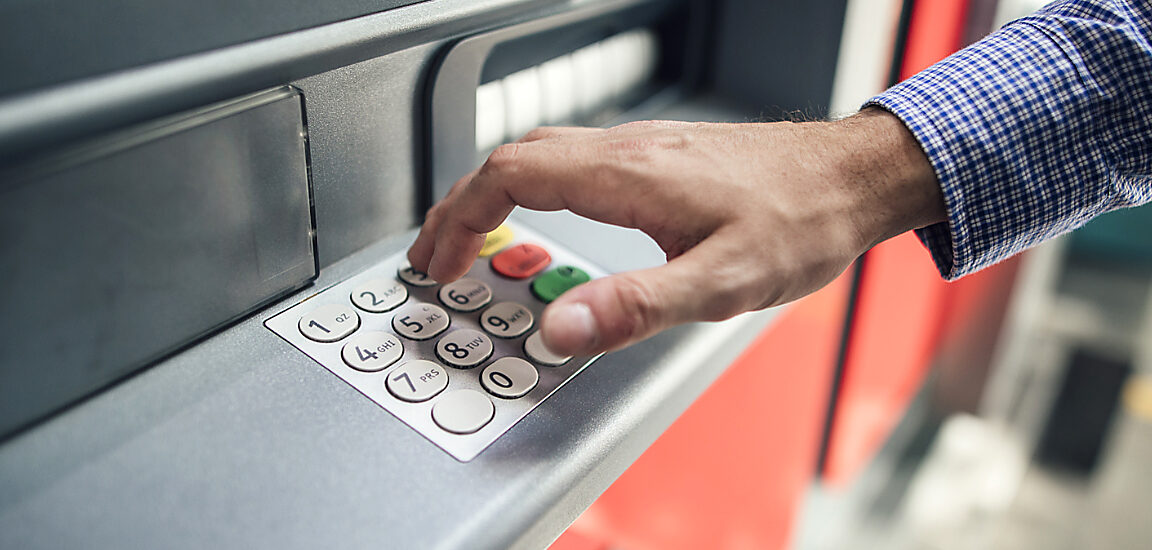
ATMs, initially designed to dispense cash, have greatly expanded services over time. Cash and check deposits, transfers, ordering of checks or statements, and FX currency dispensing all connected the customer to an increasing number of banking products and services.

Connection to a larger payments ecosystem followed with the introduction of utility bill payments, remittance, charity donations, prepaid airtime and digital wallet top-up.

Today, the ATM is a marketplace for a host of non-traditional banking services, enabling the user to purchase digital content, lottery, event and museum tickets, as well as transportation passes. At the same time, ATM screens have found their place in the world of advertising, displaying generic or personalized – often interactive – targeted messages to users.

These enhanced services attract new consumer market segments of digitally savvy individuals who view the ATM as a one stop shop, fulfilling multiple payment needs, banking or retail, at home or when traveling.

Globally, Gen Z users come to expect these ATM transactions. They receive or transfer money, buy digital content, pay bills, buy airtime, and travel the world. When transacting, they appreciate the practicality and speed of diverse digital channels. Innovative ATMs fit well with the Gen Z profile as a fast and reliable hub to a variety of everyday activities or special experiences. The ATM underlying technology is also rapidly evolving, transitioning from cards to mobile phones and from PIN security to biometrics, in line with Gen Z preferences.

Financial institutions and ATM operators who embrace diverse transaction capabilities and cutting-edge technology on their terminals will succeed in attracting the next generation to the ATM and enhance their presence and brand identity in the payments landscape of tomorrow.​