Euronet

Bitcoin and Stablecoins The Future of Everyday Money

When Bitcoin first emerged, the idea was simple: let anyone, anywhere, send money across the world without friction, delays, or middlemen. Over time, though, Bitcoin drifted into a different role. Instead of becoming everyday “internet cash,” it evolved into a digital store of value – something people invest in or hold long-term, not something they use to buy groceries or send remittances.

Bitcoin’s Strengths and Limits
Bitcoin is independent, scarce, and transparent – qualities people genuinely value. But those strengths don’t translate to daily money movement. Price swings make it tough to use for salaries or remittances, and the network isn’t designed to move thousands of small payments quickly and cheaply. It’s a great asset, but not a great everyday currency.

Stablecoins: Designed for Everyday Payments
Stablecoins were created to handle exactly what Bitcoin doesn’t. Because they’re pegged to regular currencies like the U.S. dollar, they offer price stability, faster cross-border settlement, programmable payment logic, and easy integration with wallets and mobile money. That combination makes them far more realistic for remittances, merchant payouts, and small daily transactions – no exchange-rate guesswork, no volatility surprises.
Why Stablecoins Matter Globally

In much of the world, especially in underbanked regions, people juggle multiple disconnected payment systems just to move money. Stablecoins add a digital middle layer that ties those systems together. They don’t replace local currency, cards, or bank transfers – they help everything move faster, more consistently, and more affordably. Users don’t even need to know a transaction touched a stablecoin. They just experience lower fees and faster delivery.

A Layered Financial Future
This isn’t Bitcoin vs. stablecoins vs. traditional finance. We’re heading toward a layered system: Bitcoin as a macro-level digital asset, stablecoins powering everyday payments, and banks and fintechs plugging these new rails into existing ones.

That’s where Euronet fits in. With remittances, ATM networks, and instant payments already in our DNA, platforms like Ren and ITM are positioned to bridge the new digital layer with the infrastructure processing billions of transactions today – making the world’s money move the way people actually need it to.

From Payment Silos to Payment Platforms Orchestration Is the New Architecture

The Cost of Decades of Bolted-On Rails
For decades, banks expanded payments one rail at a time. Cards, ACH, wires, real-time payments, and cross-border flows were added to meet specific needs, often on isolated systems managed by separate teams. Over time, this created environments that move money effectively but struggle to evolve.

These silos make it harder to launch new services, apply uniform controls, and gain an integrated operational view. Each new rail introduces another integration, its own rules, and additional complexity. As a result, innovation slows, costs rise, and the architecture itself becomes more fragile.

From Fragmented Stacks to Orchestrated Platforms
To address these limitations, institutions are shifting from fragmented payment stacks to orchestrated payment platforms that unify architecture and support sustainable growth.

A modern payment platform stands out not by the rails it supports, but by how it orchestrates them. Orchestration serves as a centralized control layer across all payment flows, bringing together:
• Routing and transaction decisioning
• Compliance and controls
• Message management and enrichment
• Monitoring, visibility, and exception handling

Why Orchestration Changes How Banks Scale
This architectural shift changes how banks scale. New rails connect to an existing framework rather than standing alone. Core capabilities don’t need to be rebuilt with every expansion. The result is faster service launches, stronger governance, and clearer operational insight.

How Ren Puts This into Practice
At Euronet Software, this principle drives the Ren platform. Ren is an orchestration layer that connects to existing cores, processors, and networks while coordinating transactions across card, account-to-account, and cross-border channels. Institutions can modernize incrementally and manage payments as a unified platform rather than a collection of silos.

As rails multiply, orchestration is what enables sustainable scaling.

Agentic Payments Are Coming And the shift is bigger than you think

There’s a moment in every technology cycle when something stops being a demo and starts being a default. We’re approaching that moment with AI agents and payments — and most people, even those of us in this industry, are underestimating how different it’s going to feel when it arrives.

The Loop We’ve Stopped Noticing
Right now, booking a flight means opening a browser, searching options, picking one, entering payment details, and hitting confirm. You’re in the loop at every step. That loop is so familiar most of us don’t notice it’s there. But it’s about to change.

From Assistants to Agents
AI agents – software that can reason, take actions, and complete multi-step tasks on your behalf – are beginning to operate inside payment systems in ways that go well beyond remembering your card number. Imagine telling an agent, “Find a lawn service for next Tuesday, book the best-rated option under $80, and pay for it,” and having it actually happen. It’s not science fiction. Pilots are underway overseas right now.

The Real Challenge Is Trust, not Intelligence
What makes this moment different from years of “AI will transform banking” predictions is that the hard part isn’t the intelligence anymore. It’s the trust architecture.

When an AI acts on your behalf financially, three things have to be true: you explicitly authorized what it did, the authentication is airtight, and there’s a clear, auditable record of exactly what you approved. If you said “book a flight under $400,” the system has to prove it honored that constraint, exactly. That’s what separates a useful agent from a liability.

A Time-Return Story
The underlying question is whether people can trust an entity to act on their behalf with their money. That’s reasonable – and the answer is getting closer to yes. When it tips, it won’t tip slowly.

The shift isn’t from cash to digital or cards to mobile. It’s from making payments to having them handled intelligently, verifiably, and on terms you actually set. That’s a bigger deal than most people realize yet.

Embedded Finance: A New Opportunity for Banks and Merchants

Embedded finance is changing how the world interacts with money. Instead of banking being a separate destination, financial services are becoming integrated directly into the digital platforms people already use – ride-sharing apps, shopping sites, B2B marketplaces, even software used to run a business. For banks and merchants alike, this shift is an opportunity.

For banks, embedded finance offers a new distribution model. Rather than compete head-to-head with FinTechs or wait for customers to log into a bank-branded app, banks can meet customers where they already are – in the apps and tools they use every day. It’s a way to unlock growth through partnerships, without requiring a total overhaul of legacy systems. Mid-tier and regional banks, in particular, can participate by offering APIs, issuing cards, enabling real-time payments, or even sponsoring fintech programs.

For merchants and platforms, embedding financial services can open new revenue streams, improve customer retention, and make user experiences more seamless. Offering point-of-sale lending, business checking, or split payments – all happening inside the customer journey – can differentiate a product and increase wallet share.

At Euronet Software, we see our role as the connective layer – the platform between banks and the new digital economy. With decades of experience in switching, acquiring, issuing, and cross-border payments, we have the technology,
the reach, and the regulatory expertise to help financial institutions plug in and scale embedded finance offerings. Our Ren platform seamlessly connects legacy systems to modern standards, such as ISO 20022 . And as we look forward, we’re building a suite of capabilities that allow both banks and merchants to participate in the next wave of financial innovation.

Let’s build what’s next – together.

Stablecoins: A New Rail for Real-Time Banking

Banks worldwide are under pressure to move money faster, at lower cost, and across more borders than ever before. One emerging tool drawing increasing interest from financial institutions is the stablecoin – a digital asset designed to maintain a stable value, typically pegged to a fiat currency like the US dollar or Euro.

Unlike volatile cryptocurrencies like Bitcoin, stablecoins are designed for stability, not speculation. They combine the speed, programmability, and 24/7 availability of blockchain with the price predictability of fiat. That makes them an ideal instrument for real-time settlement, especially for cross-border payments where traditional rails are slow and expensive.

For banks, the benefits are compelling:
• Instant settlement between institutions or corporate clients without correspondent banking delays
• Lower operational costs by bypassing intermediaries and reducing reconciliation overhead
• Improved liquidity with near-instant fund availability
• Programmable money that can embed compliance, disbursement rules, or escrow logic directly into transactions

The stablecoin trend is not about replacing fiat currency but about creating a faster, digital wrapper around it. At Euronet Software, we see stablecoins as a natural extension of the real-time capabilities already powering solutions like Ren Payments and Dandelion. Our global network can serve as the bridge between bank core systems and new digital settlement rails, allowing financial institutions to move value in whatever form their customers demand.
Our recent integration of CoreCard strengthens this vision. With its modern ledger and card issuing platform, banks could manage both fiat and tokenized balances on a unified system, paving the way to offer stablecoin wallets, stablecoin-backed cards, and real-time settlement options alongside traditional payment products.

Stablecoins aren’t a competitor to banks. They’re an opportunity to deliver faster, cheaper, and smarter payments, and to stay ahead as money goes digital.

Modern Card Issuing: How the CoreCard Acquisition Unlocks Global Innovation Powering the Future with Euronet Software’s Ren Payments

Executive Summary
Euronet’s announced acquisition of CoreCard marks a pivotal moment in the evolution of global card issuing and processing. The merger, which is expected to close in late 2025, will offer banks and FinTechs a comprehensive, future-ready solution for credit card issuance by integrating CoreCard’s modern, API-first issuing platform with Ren’s proven real-time payments infrastructure. Whether deployed on-prem or in the cloud, this powerful new capability will be set to deliver faster time to market, customizable programs, and operational agility across global markets.

Why Card Issuing Is Strategic Again
The market for credit and prepaid card products is undergoing a renaissance. With embedded finance, buy-now pay-later, loyalty-based lending, and digital wallets on the rise, issuers need more than legacy processors can provide.
• Modern customers expect:
• Real-time issuance and decisions
• Seamless mobile integration
• Flexible repayment options
• Personalized offers and rewards
Traditional card platforms weren’t built for this pace of innovation. As a result, banks and FinTechs alike are seeking modern issuing solutions that are fast, flexible, and scalable.

The Legacy Limitation: What Banks Struggle With
Most banks today are still operating on legacy credit card platforms that:
• Require long lead times to configure or launch new products
• Depend on manual batch processing
• Offer limited API access or third-party integrations
• Struggle to support global or cross-border requirements
These limitations slow innovation and increase the total cost of ownership. Worse, it creates a poor experience for cardholders accustomed to real-time digital interactions.

What CoreCard Brings to the Table
CoreCard is a next-generation credit card issuing and processing platform built for the realities of modern finance.
Key benefits include:
• Full support for credit, prepaid, and loyalty card programs
• Modular, API-based architecture with real-time transaction capabilities
• Configurable business rules engine to support custom workflows
• Proven track record with fintech innovators and enterprise clients
• Cloud-native or private on-premise deployment options
CoreCard has powered marquee programs for companies like Cardless and helped support co-branded cards with global names like Goldman Sachs.

Why CoreCard + Ren = A New Standard for Issuing
Ren, Euronet’s proven, modern payments platform, already delivers:
• Real-time core processing for account-based and direct-to-account payments
• Instant data visibility across channels
• A flexible API Gateway for seamless integrations
• 100% uptime by design architecture with patented Infinite Messaging framework
Once integratinon of CoreCard into the Ren ecosystem is complete, it will enable issuing solutions with:
• Embedded fraud detection and compliance capabilities
• Full integration into Euronet’s global ATM, POS, and wallet infrastructure
• Cloud or hybrid deployments, depending on client needs
• A pay-as-you-grow model for both established banks and scaling FinTechs

Real-World Use Cases
• Community Banks are launching co-branded or loyalty cards without needing to build in-house platforms.
• Fintech Startups offering credit products embedded in their apps, using Ren APIs for onboarding and CoreCard for issuing.
• Global Banks are deploying region-specific programs on-prem in some markets and cloud-based in others.

The Bottom Line
Euronet’s acquisition of CoreCard is a commitment to helping financial institutions meet the demands of modern customers. By combining Ren’s global infrastructure with CoreCard’s issuing expertise, we now offer a best-in class, future-proof solution for banks, FinTechs, and innovators worldwide.

If you’re ready to explore what’s next in credit card issuing, talk to us today.

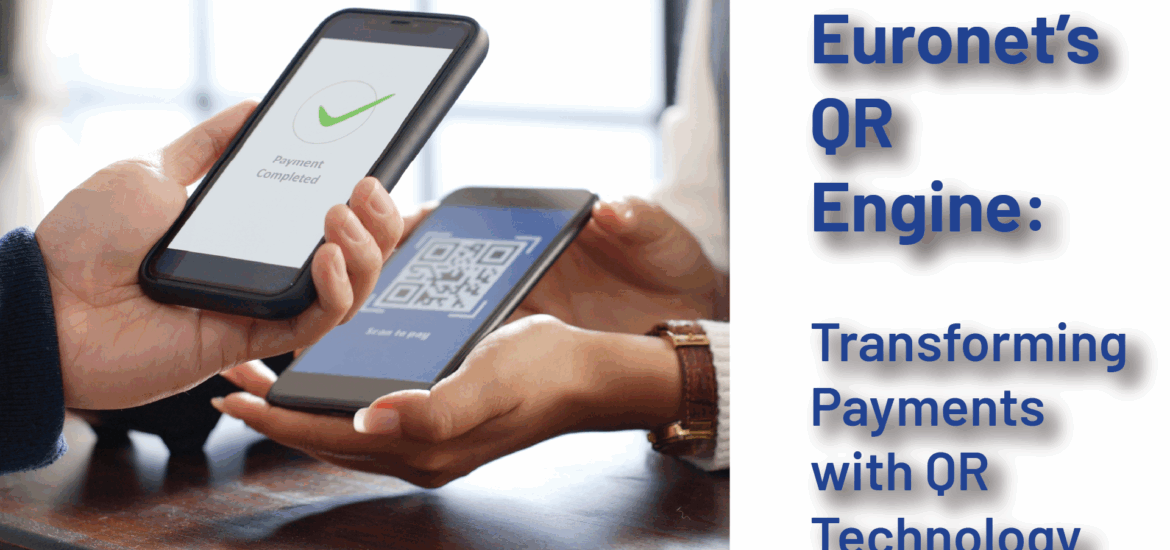
Euronet’s QR Engine: Transforming Payments with QR Technology

With smartphone adoption at record highs, QR code payments have emerged as one of the fastest-growing methods worldwide. Unlike traditional card-based systems that require expensive POS terminals, QR payments let customers scan a static or dynamic code to pay instantly using their mobile banking app, digital wallet, or payment platform. It’s contactless, secure, and accessible to anyone with a smart phone.

Euronet’s QR Engine was built for this moment. It’s an EMVCo-compliant, secure, and cost-efficient platform that integrates seamlessly with existing banking systems. The engine provides a comprehensive ecosystem, comprising a bank admin portal for system configuration, a merchant portal and app for generating and accepting QR codes, a consumer app for enabling frictionless payments, and a back-office suite for reconciliation, settlement, and dispute management.
Offering a QR payments platform gives banks a powerful opportunity to expand their acceptance networks, deepen merchant relationships, and reduce the cost of infrastructure. By equipping merchants with a system that works on any mobile device, institutions can empower even small or mobile businesses to accept payments anywhere, making commerce more inclusive and agile.

Combined with the flexibility of SoftPOS, which turns any smartphone into a payment terminal, Euronet’s QR solution allows financial institutions to leapfrog legacy POS systems entirely. This innovation reduces checkout times, enhances real-time insights, and ensures security comparable to traditional methods.

As global QR payments soar, now is the time to modernize. With Euronet’s QR Engine, financial institutions can lead the future of payments – securely, seamlessly, and everywhere.

G20 Cross-Border Payments Roadmap: Powering the Future with Euronet Software’s Ren Payments

The global payments industry is standing at the edge of its biggest transformation in decades – and the G20 Cross Border Payments Roadmap is hitting the accelerator. Designed to make international payments faster, cheaper, and more transparent, it’s reshaping how banks and financial institutions will operate in the years ahead. For Ren Payments, the modular payments hub from Euronet Software, this is more than a compliance deadline – it’s a once-in a-generation opportunity to lead.

Accelerating ISO 20022 Adoption
One of the roadmap’s cornerstone goals is the worldwide shift to ISO 20022, a rich data standard for payment messages. Many banks are still stuck on older ISO 8583 or proprietary systems, facing steep hurdles to modernization. Ren cuts through this barrier with a visual, low-code development environment that connects legacy cores directly to real-time ISO 20022 networks, without requiring a full system overhaul. Recognized by the Federal Reserve’s FedNow Service Provider Showcase in 2022, Ren now stands ready as SWIFT and other networks finalize their ISO 20022 migrations.

Unlocking Global Interoperability
Beyond messaging, the roadmap pushes for greater interoperability between national systems. Ren was built for this moment. It offers out-of-the-box connectivity to Dandelion – Euronet’s real-time cross-border network leveraging Ria and XE rails – making cross-border payments as seamless as domestic ones. As instant payment systems link across regions, from TARGET Instant Payment Settlement in the EU to fast-payment linkages across ASEAN, Ren acts as an intelligent router – dynamically selecting the fastest, most cost-effective route.

Built for Compliance, Speed, and Innovation
Crucially, Ren embeds real-time compliance checks, sanctions screening, and fraud prevention into every transaction. Its cloud-based, always-on infrastructure enables banks to meet new G20 standards while launching innovative services like cross-border request-to-pay and multi-currency settlement.

As G20-driven deadlines approach, banks need more than upgrades – they need a leap forward. Ren delivers it: fast to deploy, globally connected, and future ready.

Power of Personalization

The average cost of acquiring new customers or retaining existing customers is generally on the rise. In the highly competitive world of banking, financial institutions are constantly searching for ways to gain an edge and stand out from the crowd. One of the most effective ways to achieve this is through personalization.

Personalization means treating each customer as unique and providing them with an experience that facilitates their personal objectives and ambitions. ATMs are ideally suited to a variety of personalization strategies–from simple localization imaging and on- screen messaging to more complex individual product recommendations.

ATMs are most effective for customized marketing when financial institutions tap into the valuable data they collect on customers. ATMs have the added benefit of delivering
a captive audience that’s more receptive to marketing messages than the audiences that institutions might reach through other channels. In fact, when consumers trust a brand, 59% say they are more likely to buy the brand’s new products and/or buy the brand even if not as cheap as a competitor.1

Contextual personalization, occurring in real-time– has the power to drive sales and revenue, boost conversion rates, and foster customer loyalty. A 2021 study by McKinsey2 found that while personalization does drive performance and better customer outcomes, only 47% of companies offer personalized experiences based on live consumer data. This means, financial institutions that utilize on-target personalization have a distinct advantage over competitors who don’t.

Why is real-time personalization so valuable? The following are just a few documented benefits of real-time personalization:

  • Offers selected in real-time interactions have been
    shown to have much higher response rates
  • An increased cross-sell success rate from under
    10% to more than 40%
  • 200% increase in sales attributed to offers printed on receipts

1 https://www.edelman.com/trust/2023/trust-barometer/special-report-brand-trust/ collapse-purchase-funnel
2 https://www.mckinsey.com/capabilities/growth-marketing-and-sales/our-insights/ the-value-of-getting-personalization-right-or-wrong-is-multiplying

ATMs are attention-getting billboards for banks.

To achieve high levels of success with personalization you need to understand your customers’ wants, needs, and behavior.

By considering both a person’s identity and behavior, you can target the right message to the right person at the right time. This approach is truly a win-win, providing your customers with attractive and relevant offers and improving your chances for a successful cross-sell. Creating distinctive, captivating communications about your company, your brand, and your products will help you to stand out.

Who is the customer?

  • What details are available in your customer database? Information regarding demographics, psychographics, account details, purchase history, social network relations, and so forth can provide great insights that can be used for highly personalized on-screen marketing offers. Ren ATM Management makes it easy for marketing staff to
    design and execute these campaigns without IT staff involvement.

What is the customer doing?

  • Behavior — information about how the person is behaving during the moment of interaction, for example: what type of transaction(s) is the customer performing at the ATM during this visit; what time of day is the transaction occurirng; where is this ATM located; what insights do their shopping patterns provide? Utilize this information to serve up helpful offers and product recommendations.

Much as they do in their branches and other channels, banks are using ATMs to deliver the more personalized experience that consumers demand. Today’s ATMs are increasingly mobile-centric, capable of taking full advantage of advanced personalization. Modern ATM Management systems, such as Ren ATM Management, capture real-time data and have built-in analytics that can record user demographics as well as transaction times and patterns. Financial institutions can use this data to improve the overall customer experience. ATM personalization can range from allowing customers to configure a set of shortcuts for their most frequent transactions, to quick-cash options, to targeted product offerings or brief educational presentations based on customer segmentation. By delivering highly personalized experiences that are contextual, intelligent, and secure, ATMs can meet a wide variety of customer needs, around the clock– even when branches are closed. And– ATMs do so at a reduced cost compared to tellers.

Personalization Payoffs

Cross-Selling

Advertising relevant banking products on the ATM screen while a transaction is being processed. By conveying relevent brand messages, promoting your latest products and services, and showcasing helpful banking advice based on customer segmentation your institution can experience a significant increase in additional sales. 80% of brands that use digital signage record an increase in sales, up to 33% .
An Enriched Customer Experience

  • Creating customized, relevant messaging that is captivating and informative strengthens your organization’s relationships with your customer base. Being able to demonstrate that you know your customers’ needs and understand their interests is a strong advantage over your competitors.

Localization

  • Based on the location of the ATM advertisements can be personalized for the area. An ATM in a shopping mall may offer unique discounts only available to ATM users for a nearby merchant or restaurant. The coupon can be printed on the ATM receipt. An ATM near an arena or event venue may offer digital tickets to upcoming events.

Security & Convenience

  • By utilizing QR codes and Near-Field Communication (NFC) technology, ATM transactions can be performed with a higher level of both security and convenience. By initiating a transaction on their smartphone and then scanning a QR code or bar code at the ATM to complete the process, consumers avoid the risks associated with card skimming. QR codes can also be used to allow customers to download a detailed product brochure, initiate an application for a loan, or open an additional type of account.

59% of people who see a digital ad want to learn more about the topic

Digital Signage has a recall rate of 83%

3https://www.digitalsignagetoday.com/blogs/100-proven-roi-driven-digital-signage-statistics-2022

Why Ren ATM Management?

Ren ATM Management allows FI’s to personalize interaction in multiple ways:

  • First, by allowing customers to save a set of as many as seven preferred transaction shortcuts, customers can quickly and easily access the transactions that they most typically perform. This means that for most customer interactions the customer can access a saved transaction shortcut and reduce the total transaction time. It also helps to nurture the perception that the FI “knows” the customer and is familiar with their routine. And because the transaction shortcuts are customer-maintained, updating the shortcuts is a simple process that takes effect immediately allowing customers to keep the preferences current as their needs and lifestyle may change.
  • Additionally, Ren ATM Management supports the use of the ATM as a digital billboard displaying targeted messaging and product offers based on a host of customer characteristics so that customers can receive timely and relevant information about beneficial services, or even notifications of changes in bank policies that impact them. Doing so doesn’t have to add time to the transaction as Ren uses the seconds during which account information is being retrieved or while cash is being dispensed to display either video or still images to convey this information
  • ATMs in retail locations provide unique opportunities to partner with nearby businesses, particularly if those businesses are also customers of your institution. Since Ren ATM Management also supports couponing, either printed on the customers receipt or dispensed from one of the ATM cash cassettes, you can charge the business an additional amount for advertisements that include coupon dispensing. Coupons can be enhanced with images that tie back to the on-screen advertisement, as well as with barcodes and/or QR codes to assist with tracking redemption of the coupons.
  • Another way Ren ATM Management supports customer convenience and time saving is the ability to purchase virtually any product or service via the ATM. From banking products to third-party offerings, Ren ATM Management allows the ATM to function as digital marketplace. FI’s can use their own market intelligence to determine which products or services are most meaningful to their customer base. Ren ATM Management even allows flexibility to vary the products and services by ATM location, allowing for just the right product mix at each ATM. This not only ensures that customers have the services they are looking for but also reduces fleet costs by only deploying the hardware and functions where they are truly needed.
  • Perhaps, one of Ren ATM Management’s most game-changing functions is the ability to empower marketing resources to make branding and imagery changes on their own—without IT staff support. Using Ren’s Designer module, marketing can easily insert new images, change fonts, colors, screen text, button shapes and labels with ease. Making these types of changes is a simple matter of drag & drop or point & click. With Ren Designer, users can update ATM screen imagery as well as make updates to receipt layout and imagery to ensure that the organization’s branding and image are reinforced and supported with all transactions.

Ensure Continuous Operations for Your Financial Institution

In banking, where every second counts, system downtime can result in lost transactions, reduced customer trust, and missed opportunities. Financial institutions require reliable, uninterrupted service to maintain a competitive edge and meet evolving customer expectations. This is where Euronet’s patented 100% Uptime by Design comes into play, ensuring continuous payments operations with no downtime—planned or unplanned.

Euronet’s Ren Payments platform ensures your systems stay operational, even during upgrades, maintenance, or unforeseen disruptions. This patented technology eliminates the need for idle, redundant servers by leveraging a distributed system of data centers connected via a private network. Using an abstracted operating system that allows seamless communication between plugins, the system routes transactions without relying on specific data center destinations.

In short, 100% Uptime by Design assures that your financial institution can continue operating even when individual components are being upgraded or a data center experiences failure.

How 100% Uptime by Design Works

Euronet’s patented technology relies on several key components to achieve continuous uptime:

  • Distributed Data Centers: Financial transactions are distributed across multiple physical locations, ensuring redundancy and fault tolerance.
  • Plugin-Based Architecture: Each plugin is responsible for specific functions, and they communicate with each other through an abstracted operating system, which handles routing across data centers.
  • Zero Downtime Upgrades: Upgrades or system changes can be made without impacting the system’s overall performance or requiring downtime.
  • Load Balancing and Scalability: The system provides better load balancing opportunities and can scale without affecting the performance of ongoing transactions.

The Backbone of Financial Reliability

Euronet’s Ren Payments platform ensures operational efficiency and business continuity, providing the following key benefits:

  • No Downtime: Make changes or upgrades without affecting system performance.
  • Zero Impact from Data Center Failures: The system continues to operate even if a data center fails, ensuring uninterrupted service.
  • Improved Scalability and Load Balancing: Optimize system resources and scale operations without disrupting service.
  • Reduced Operating Costs: No idle servers mean lower infrastructure costs while maintaining full performance.

Looking Ahead

Banks and financial institutions can offer seamless services, enhance customer trust, and stay competitive in a fast-moving digital world by ensuring continuous operations.

With Euronet’s patented solution, the future of financial transactions is here—uninterrupted, scalable, and secure.

Engage with Euronet and Learn More

Discover how Euronet can transform your financial operations. Learn more about the technology that powers uninterrupted service at Euronet Software.