Euronet

The Rise of Embedded Finance: New Opportunities for Banks

Share

New Opportunities for Banks

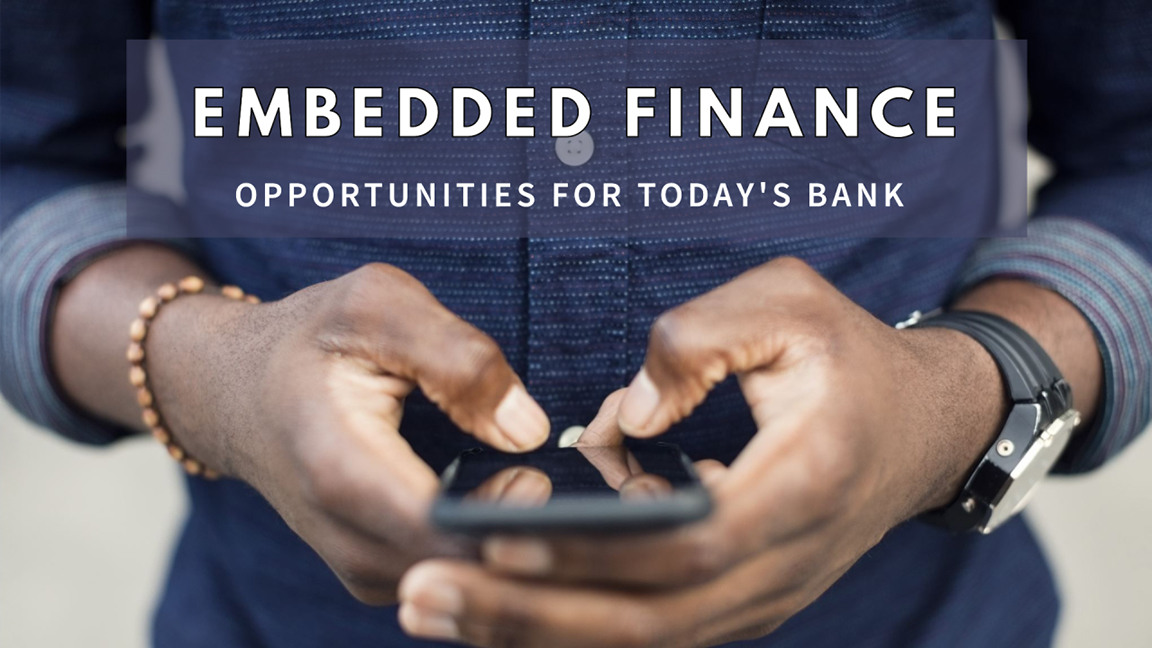
In recent years, the concept of embedded finance has reshaped the traditional banking and payments landscape. This innovative approach allows non-financial companies to integrate financial services into their platforms, providing a seamless experience to consumers. From major players like Amazon and Uber to smaller businesses, embedded finance is democratizing access to financial services. But what role do banks and third-party vendors play in this evolving market, and how can technology solutions help facilitate this transformation?

Understanding Embedded Finance

Embedded finance essentially enables companies to incorporate banking services—such as payment processing, lending, or insurance—directly into their non-banking platforms. This integration provides a more cohesive user experience, making financial transactions as straightforward as ordering a ride or buying groceries online.

For example, platforms like Robinhood have changed the way people invest and manage their finances by merging brokerage, banking, and retirement accounts through user-friendly interfaces. This not only simplifies user interaction but also enhances customer loyalty and service utilization.

The Role of Banks and Third-Party Vendors

Banks and third-party vendors are central to the embedded finance ecosystem. They provide the necessary infrastructure and regulatory framework for non-financial companies to offer financial services. Banks can leverage their existing capabilities and trust to partner with fintech and other industries wishing to embed financial services into their offerings.

By utilizing banking infrastructure like Switching & Routing to access bank balances and safely expose them to third parties for embedded finance offerings, there is a clear pathway for banks to become integral players in providing backend solutions that support embedded finance.

The Advantages to Banks of Embedded Finance

  • Increased Customer Base: By partnering with third-party companies, banks can reach a broader audience.
  • Enhanced Brand Presence: When a bank’s services are embedded into a third party’s offerings, it increases the bank’s visibility and market presence without the need for extensive marketing campaigns.
  • Diversified Revenue Streams: Partnering with various third parties allows banks to diversify their revenue sources. They can earn fees from third-party companies for providing banking services or earn interest from the new accounts opened through these partnerships.
  • Improved Customer Engagement: Embedded finance can enhance customer engagement by providing seamless financial services within a third party’s ecosystem. Customers are more likely to use banking services if they are conveniently integrated into platforms they already use and trust.
  • Cost Efficiency: Banks can save on customer acquisition costs by leveraging the customer base of their partners. The third-party companies essentially market the bank’s services, reducing the bank’s need for extensive marketing and sales efforts.
  • Innovation and Flexibility: Working with third parties often requires banks to innovate and adapt their services to meet the specific needs of the partner’s customer base. This can lead to the development of new financial products and services that can be offered more broadly.
  • Data and Insights: Banks can gain valuable data and insights from their partnerships, helping them understand customer behaviors and preferences better. This information can be used to tailor services and improve customer satisfaction.
  • Regulatory Compliance: Banks already have the necessary regulatory frameworks in place to offer financial services. Third-party companies can leverage this compliance infrastructure to offer banking services without needing to navigate the complex regulatory landscape themselves.
  • Risk Mitigation: Banks can spread risk by collaborating with third parties. For example, the financial risk associated with extending new services is shared between the bank and the partner company.
  • Enhanced Customer Trust: Partnering with reputable third-party companies can enhance a bank’s credibility and trustworthiness in the eyes of consumers, particularly if the third party has a strong brand reputation.

These advantages make embedded finance a compelling strategy for banks looking to expand their reach, innovate their offerings, and enhance customer engagement and satisfaction.

How Ren Can Facilitate Embedded Finance

Euronet’s Ren Payments platform is designed to provide a robust, secure, and flexible backbone for any company looking to venture into embedded finance. Here’s how Ren could empower banks and third-party vendors:

  • Modern, Flexible Technology: Ren’s platform is built with modern technology designed for flexibility to adapt to present and future embedded finance needs. Its platform-agnostic design means it can operate across various environments, whether on private or public clouds like Azure, GCP, or AWS.
  • Developer-Friendly Tools: With industry-standard open APIs, Ren allows developers to easily integrate banking services into their applications, making it easier for banks and third parties to customize and extend their offerings.
  • Seamless Global Payments: By bridging markets and uniting currencies, Ren helps banks facilitate faster and more efficient cross-border transactions, a critical component of global embedded finance solutions.
  • Faster Market Entry: Ren’s streamlined regulations and card issuance solutions enable quicker launch times for new products, allowing banks and their partners to stay competitive and responsive to market demands.
  • High Availability and Business Continuity: Ren guarantees 100% availability with its active-active+ and adaptive routing strategies, ensuring that financial services can be offered continuously, without interruption due to technical maintenance or failures.

Looking Ahead

The landscape of financial services is evolving rapidly, with embedded finance at the forefront of this transformation. For banks and third-party vendors looking to explore this burgeoning field, partnering with a technology provider like Ren can provide the necessary tools and infrastructure to successfully integrate and offer these services. By doing so, they can not only expand their market reach but also enhance the overall customer experience, paving the way for a new era of financial integration.

Engage with Euronet’s Ren API Gateway

Discover the Ren API Gateway’s transformative potential for your institution. Embrace the technology that powers seamless, secure, and efficient digital banking.

To explore how Euronet can support your digital transformation journey, contact our team, or visit us at https://euronetsoftware.com/.


Randall Hula is a Global Product Marketer at Euronet Software Solutions, where he collaborates with senior management to deploy targeted communications strategies across the company’s global operations. With a rich background in consumer insights and strategic communications across diverse industries, including consumer packaged goods, healthcare, and retail, Randall brings fresh and influential ideas to the financial services and payments industry.

Bitcoin and Stablecoins The Future of Everyday Money

When Bitcoin first emerged, the idea was simple: let anyone, anywhere, send money across the world without friction, delays, or middlemen. Over time, though, Bitcoin

When Bitcoin first emerged, the idea was simple: let anyone, anywhere, send money across the world without friction, delays, or middlemen. Over time, though, Bitcoin drifted into a different role. Instead of becoming everyday “internet cash,” it evolved into a digital store of value – something people invest in or hold long-term, not something they use to buy groceries or send remittances.

Bitcoin’s Strengths and Limits
Bitcoin is independent, scarce, and transparent – qualities people genuinely value. But those strengths don’t translate to daily money movement. Price swings make it tough to use for salaries or remittances, and the network isn’t designed to move thousands of small payments quickly and cheaply. It’s a great asset, but not a great everyday currency.

Stablecoins: Designed for Everyday Payments
Stablecoins were created to handle exactly what Bitcoin doesn’t. Because they’re pegged to regular currencies like the U.S. dollar, they offer price stability, faster cross-border settlement, programmable payment logic, and easy integration with wallets and mobile money. That combination makes them far more realistic for remittances, merchant payouts, and small daily transactions – no exchange-rate guesswork, no volatility surprises.
Why Stablecoins Matter Globally

In much of the world, especially in underbanked regions, people juggle multiple disconnected payment systems just to move money. Stablecoins add a digital middle layer that ties those systems together. They don’t replace local currency, cards, or bank transfers – they help everything move faster, more consistently, and more affordably. Users don’t even need to know a transaction touched a stablecoin. They just experience lower fees and faster delivery.

A Layered Financial Future
This isn’t Bitcoin vs. stablecoins vs. traditional finance. We’re heading toward a layered system: Bitcoin as a macro-level digital asset, stablecoins powering everyday payments, and banks and fintechs plugging these new rails into existing ones.

That’s where Euronet fits in. With remittances, ATM networks, and instant payments already in our DNA, platforms like Ren and ITM are positioned to bridge the new digital layer with the infrastructure processing billions of transactions today – making the world’s money move the way people actually need it to.

From Payment Silos to Payment Platforms Orchestration Is the New Architecture

The Cost of Decades of Bolted-On Rails For decades, banks expanded payments one rail at a time. Cards, ACH, wires, real-time payments, and cross-border flows

The Cost of Decades of Bolted-On Rails
For decades, banks expanded payments one rail at a time. Cards, ACH, wires, real-time payments, and cross-border flows were added to meet specific needs, often on isolated systems managed by separate teams. Over time, this created environments that move money effectively but struggle to evolve.

These silos make it harder to launch new services, apply uniform controls, and gain an integrated operational view. Each new rail introduces another integration, its own rules, and additional complexity. As a result, innovation slows, costs rise, and the architecture itself becomes more fragile.

From Fragmented Stacks to Orchestrated Platforms
To address these limitations, institutions are shifting from fragmented payment stacks to orchestrated payment platforms that unify architecture and support sustainable growth.

A modern payment platform stands out not by the rails it supports, but by how it orchestrates them. Orchestration serves as a centralized control layer across all payment flows, bringing together:
• Routing and transaction decisioning
• Compliance and controls
• Message management and enrichment
• Monitoring, visibility, and exception handling

Why Orchestration Changes How Banks Scale
This architectural shift changes how banks scale. New rails connect to an existing framework rather than standing alone. Core capabilities don’t need to be rebuilt with every expansion. The result is faster service launches, stronger governance, and clearer operational insight.

How Ren Puts This into Practice
At Euronet Software, this principle drives the Ren platform. Ren is an orchestration layer that connects to existing cores, processors, and networks while coordinating transactions across card, account-to-account, and cross-border channels. Institutions can modernize incrementally and manage payments as a unified platform rather than a collection of silos.

As rails multiply, orchestration is what enables sustainable scaling.

Agentic Payments Are Coming And the shift is bigger than you think

There’s a moment in every technology cycle when something stops being a demo and starts being a default. We’re approaching that moment with AI agents

There’s a moment in every technology cycle when something stops being a demo and starts being a default. We’re approaching that moment with AI agents and payments — and most people, even those of us in this industry, are underestimating how different it’s going to feel when it arrives.

The Loop We’ve Stopped Noticing
Right now, booking a flight means opening a browser, searching options, picking one, entering payment details, and hitting confirm. You’re in the loop at every step. That loop is so familiar most of us don’t notice it’s there. But it’s about to change.

From Assistants to Agents
AI agents – software that can reason, take actions, and complete multi-step tasks on your behalf – are beginning to operate inside payment systems in ways that go well beyond remembering your card number. Imagine telling an agent, “Find a lawn service for next Tuesday, book the best-rated option under $80, and pay for it,” and having it actually happen. It’s not science fiction. Pilots are underway overseas right now.

The Real Challenge Is Trust, not Intelligence
What makes this moment different from years of “AI will transform banking” predictions is that the hard part isn’t the intelligence anymore. It’s the trust architecture.

When an AI acts on your behalf financially, three things have to be true: you explicitly authorized what it did, the authentication is airtight, and there’s a clear, auditable record of exactly what you approved. If you said “book a flight under $400,” the system has to prove it honored that constraint, exactly. That’s what separates a useful agent from a liability.

A Time-Return Story
The underlying question is whether people can trust an entity to act on their behalf with their money. That’s reasonable – and the answer is getting closer to yes. When it tips, it won’t tip slowly.

The shift isn’t from cash to digital or cards to mobile. It’s from making payments to having them handled intelligently, verifiably, and on terms you actually set. That’s a bigger deal than most people realize yet.

Embedded Finance: A New Opportunity for Banks and Merchants

Embedded finance is changing how the world interacts with money. Instead of banking being a separate destination, financial services are becoming integrated directly into the

Embedded finance is changing how the world interacts with money. Instead of banking being a separate destination, financial services are becoming integrated directly into the digital platforms people already use – ride-sharing apps, shopping sites, B2B marketplaces, even software used to run a business. For banks and merchants alike, this shift is an opportunity.

For banks, embedded finance offers a new distribution model. Rather than compete head-to-head with FinTechs or wait for customers to log into a bank-branded app, banks can meet customers where they already are – in the apps and tools they use every day. It’s a way to unlock growth through partnerships, without requiring a total overhaul of legacy systems. Mid-tier and regional banks, in particular, can participate by offering APIs, issuing cards, enabling real-time payments, or even sponsoring fintech programs.

For merchants and platforms, embedding financial services can open new revenue streams, improve customer retention, and make user experiences more seamless. Offering point-of-sale lending, business checking, or split payments – all happening inside the customer journey – can differentiate a product and increase wallet share.

At Euronet Software, we see our role as the connective layer – the platform between banks and the new digital economy. With decades of experience in switching, acquiring, issuing, and cross-border payments, we have the technology,
the reach, and the regulatory expertise to help financial institutions plug in and scale embedded finance offerings. Our Ren platform seamlessly connects legacy systems to modern standards, such as ISO 20022 . And as we look forward, we’re building a suite of capabilities that allow both banks and merchants to participate in the next wave of financial innovation.

Let’s build what’s next – together.

Stay Connected with Euronet Worldwide

For the latest updates and insights, follow Euronet Worldwide on LinkedIn. Discover new trends in financial technology and connect with industry experts.